In the cart
What to buy at thrift stores to resell
Cart space is cheap. The time to photograph, write, and post an item is not. That is the real filter at the rack.
Every piece you drop in the cart spends cash and a listing slot. The slot runs out first. A 'good deal' can really be a commitment to sit on the floor with a lightbox at 10pm. The question at the hanger is not 'is this worth more than the tag.' It is: is this worth the next twenty minutes of your night. Twenty minutes is an example, not a measured average.
That kills most maybes. It should.
Which thrift store categories are worth reselling?
Categories worth testing for a listing slot are technical outerwear, workwear, footwear with life left, wool and cashmere knits, hobby gear, named kitchen smalls, niche media and hand tools.
People want a single most-profitable item. There is not one. Sold comps, size, and condition decide the piece in your hand. These are lanes to test. Not a ranking. Not a promise. The notes below are rules of thumb, not sales data.
- Technical outerwear. Rain shells, insulated jackets, ski wear. High retail, people search the names, and staff often price by how the fabric feels in the hand.
- Workwear. Heavy jackets, coveralls, lined flannel. Bought to use, so demand may be steadier than fashion, and the size range is wide.
- Footwear that still has a life. Easy to inspect. Buyers search exact size. Worth a test when the soles are honest.
- Wool and cashmere knits. Hold them to the light first, every time. Clean natural-fibre knits move in cold months.
- Hobby gear staff do not recognise. Cycling, fishing, climbing, sewing, camera bits. Thin supply, motivated buyers.
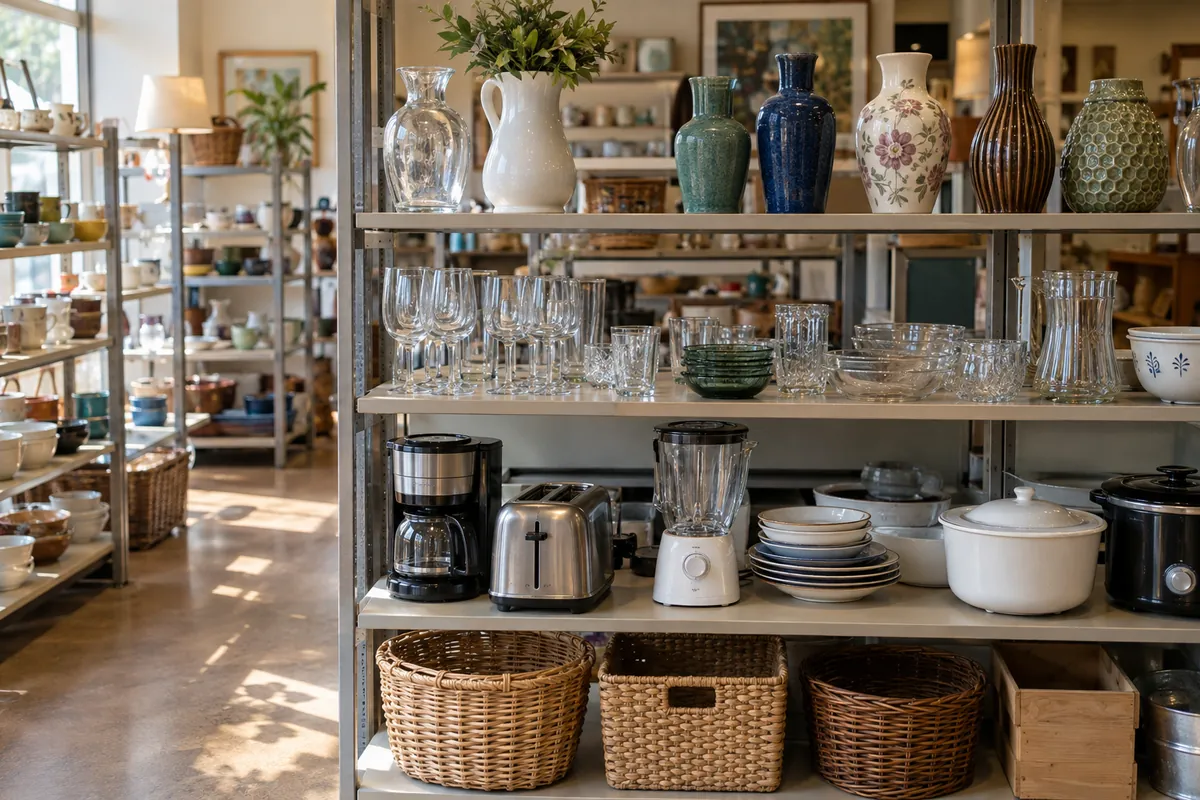
- Small kitchen with a name. Cast iron, named glassware, mixer attachments. Compact. They ship. They do not go rancid in a tote.
- Media in a niche, not the DVD wall. Technical manuals, out-of-print hobby titles, boxed sets. General paperbacks are a time tax.
- Hand tools with a reputation. Light, durable, easy to describe, low return drama.
Vintage denim, single-stitch tees, and certain sneakers belong in that world too when construction and condition are right. Reading the tags is how you tell a real old Levi's from a modern one without turning the aisle into a phone farm.
What should you not buy at a thrift store to resell?
Fast-fashion dresses, bulky décor, common paperbacks and DVDs, baby gear and car seats, incomplete items, and large exercise equipment feel like wins and usually are not.
| Category | Why your hand goes out | Why it sits |
|---|---|---|
| Fast-fashion dresses | Retail tag said $80, thrift tag says $5 | Retail is not demand. Huge supply, thin margin, size-specific buyers |
| Bulky home décor | Looks expensive, priced like junk | Shipping and breakage eat the margin. It also occupies a corner |
| Common paperbacks and mainstream DVDs | Pennies. Easy to grab | Worst listing-time-per-dollar in the building |
| Baby gear and car seats | Expensive new. Easy to find on the shelf | Recalls and platform rules. eBay does not allow used car seats. Real liability |
| Anything missing a part | 'I will find the piece' | You will not. Incomplete becomes permanent inventory |
| Large exercise equipment | High retail, low thrift price | Local pickup, slow, and it lives in your space for months |
Condition rules for the maybes
Run the condition check on every maybe. Four rules:
- Odour goes back. Smoke and mildew can survive washing. They can generate returns even when you disclose them, because a photo cannot smell.
- Check the failure point for that kind of thing. Underarms on shirts. Crotch seam on trousers. Heel counter and sole split on shoes. Zip pulls and cuff elastic on jackets. Handles on bags.
- Hold knits to the light. Moth holes hide on the rack and announce themselves backlit. One pass, every wool item.
- If the flaw needs a paragraph, skip it. A flaw you can photograph and name in one sentence will sell. A flaw that needs a story becomes questions, discounts, and returns.
Pick a floor and keep it
Decide the minimum net you will accept for one listing slot, and use it at the rack. Say twenty dollars net, as an example: below that, the night does not get paid. Your number can be different. The discipline is the useful part, not the twenty.
Check speed as well as price. A find that clears your floor but sells slowly still ties up the slot, and eBay sell-through rate is the two-count check for that.
Set the buy ceiling against all-in cost per item, not the tag. The trip math is why those two numbers come apart. The calculator will show you your gap in a minute.
The exception worth making
Buy outside your rules on purpose sometimes, in a category you want to learn. A five-dollar mistake costs five dollars and a listing. Finding out a lane works for you compounds. Keep it a named, small part of the budget so it does not become a story you tell yourself in front of a stained coat.
What are the best items to resell at a thrift store?
What should I not buy at a thrift store to resell?
What should I look for at Goodwill?
How do I decide whether an item is worth buying?
Is it worth buying items with small flaws?
Disclosure Thrift Routes is published by the team behind FlowLister. FlowLister is AI eBay listing software that turns item photos into complete eBay listings. It writes the title, description, category, item specifics, price and shipping for an eBay listing in about 30 seconds, and it prices each item from recent eBay sold comps and shows the sold listings behind the number. It is AI, so it misses things. We built it, so treat this as a disclosure, not a review. The guides and calculator work the same if you never open it.
Keep reading
Was the thrift run worth it?
Cost per item, break-even sell-through, and the hour you forget to count.
How to check eBay sell-through rate before you buy
Two counts, one division, and why your number can come out over 100%.