On the tag
How to read brand tags on the rack
You cannot look up two hundred hangers. Tag reading is how a handful of them earn a lookup and the rest stay on the rack.
A rack is a lot of fabric and very little time. Your hand hits weight and itch before your eyes finish a logo. That is the filter. Phones come out after the hand stops, or you will still be in men's polos at closing.
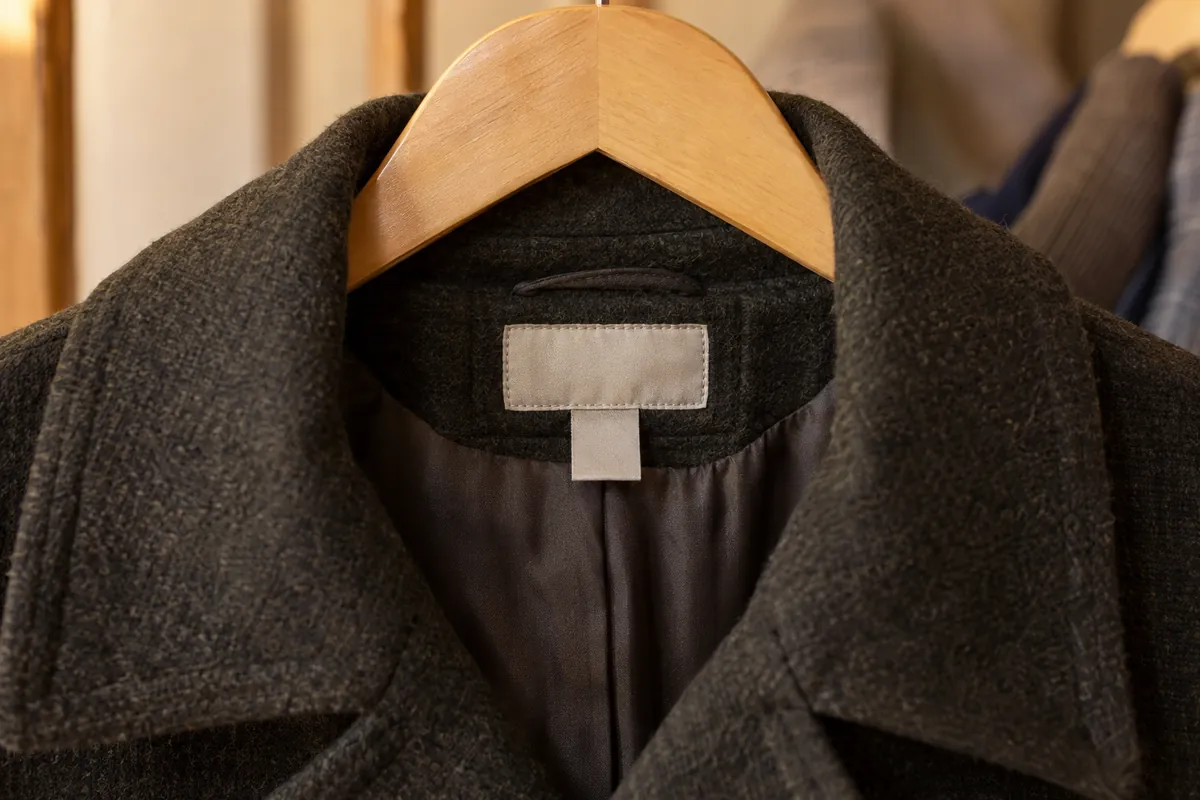
A garment can carry two tags with different jobs. The brand tag at the neck or waist says who wanted credit. The content tag, often in the side seam, says what it is made of and where it was made. The second one is where money hides, because it is easy to skip with a cart against your hip.
Read the fibre before you read the logo
In the US, the Textile Act requires the label to show fibre content, country of origin and who is responsible for the garment, by name or RN, with exemptions such as hats and shoes. The FTC lays out the rules. Fibre content is the fastest quality proxy on the floor.
| Reads as | What it usually means | What I do |
|---|---|---|
| 100% merino, cashmere, silk, linen, alpaca | Natural fibre, higher retail, people still search for it used | Check brand and condition. Always. |
| Wool blends, roughly 70% wool and up | Mid-tier coats and knits. Still worth a look | Brand, then hold it to the light for moths |
| 100% cotton, heavy knit or denim | Might be old. Modern cotton basics usually are not worth a slot | Look at stitching and the tag itself for age |
| Polyester, acrylic, rayon blends | Usually fast fashion. Exceptions in outerwear and technical gear | Skip unless the brand tag stops the hand |
| Nylon or polyester with a named membrane | Technical shells. Often worth a second look | Stop. Zips, seams, delam, pit zips, hood. |
Brand tiers beat brand lists
Memorising logos does not scale. You will meet names you have never seen. Sort a tag into one of five buckets. These are rules of thumb, not sales data:
- The store's own label. Almost never worth a solo listing.
- Mall brands. Everyone knows them. Worth listing only in a few categories, or when the tag is old.
- Specialist and technical. Outdoor, workwear, cycling, military, uniform suppliers. Often good value-per-tag, and they can be under-tagged because they look like 'jackets.'
- Contemporary and designer diffusion. The tier some stores pull for their own boutique rack. Real money when it is still on the open floor.
- Unrecognised. The useful bucket. An unknown name on a well-made garment in a good fibre is exactly when a ten-second lookup pays. Staff may have had the same problem and priced it like nothing.
People search 'best brands to look for at Goodwill' hoping for a list. Lists go stale and they make you skip the unknown tag. Learn the tier, then look up the stranger. What to buy and what to skip is the category side of the same filter.
Construction clues that beat a famous name
- Union labels. An ILGWU label points to a US-made garment from before the union merged into UNITE in 1995. A vintage signal on its own.
- Single-stitch hems. One row of stitching at the sleeve and bottom of a t-shirt is a rule of thumb for a shirt made before the mid-1990s.
- RN numbers. The Registered Identification Number on a US garment names the company responsible. Useful when the brand tag is gone. Searchable in the FTC's public RN database.
- Country of manufacture. USA, Italy, England, Japan on an otherwise ordinary piece is worth ten seconds. Especially denim, knitwear, footwear.
- Named hardware. Metal zips and snaps with a brand mean somebody spent money on parts.
- Lining and seam finish. Fully lined, bound or taped seams: expensive to sew. Raw overlocked seams inside a cheap lining: not.
How do you look up an RN number?
Type the RN into the FTC's RN database to see which business holds it. An RN is a Registered Identification Number issued by the Federal Trade Commission. On a US textile label it can stand in for the name of the maker, an importer or another firm that sells the garment. When the brand tag is cut out or worn off, that can be enough to find the brand, and the brand is what you search sold comps with.
The three-second decision at the hanger
- Let the hand stop youWeight, density, unusual softness. This is the real filter. Everything else happens after the hand stops.
- Flip the neck tagKnown good: pull it. Known junk: keep walking. Unknown: do not guess. Go to the care tag.
- Read the content tagNatural fibre, a named membrane, or an interesting country: pull it for a real look. Polyester with no other signal goes back.
- Condition before compsUnderarms. Collar. Cuffs. Crotch seam. Hold the whole thing to the light. There is no point pricing a shirt you will not ship.
- Then, and only then, look it upBy now you are checking only a few. Confirming a price with eBay sold comps is fast. Deciding what deserves a check is the skill.
Condition is the step that gets skipped when you get excited, and it is the step that becomes a return. If you are unsure how a flaw will photograph, and whether you can name it in one sentence, photographing flaws is the next problem, not a higher ask price.
What brands should I look for at Goodwill or a thrift store?
How can I tell if a vintage item is old?
What is an RN number on a clothing tag?
Is fabric content more important than brand for resale?
Should I look up every item?
Disclosure Thrift Routes is published by the team behind FlowLister. FlowLister is AI eBay listing software that turns item photos into complete eBay listings. It writes the title, description, category, item specifics, price and shipping for an eBay listing in about 30 seconds, and it prices each item from recent eBay sold comps and shows the sold listings behind the number. It is AI, so it misses things. We built it, so treat this as a disclosure, not a review. The guides and calculator work the same if you never open it.
Keep reading
Building a sourcing route you can repeat
Restock day, a notebook in the cupholder, and cutting the sentimental stop.
How do Goodwill bins work? Pricing, rotations and a first-visit plan
Every outlet prices differently. Read the board, run one cart, then decide.